.png?v=84312248615111272951666300793)


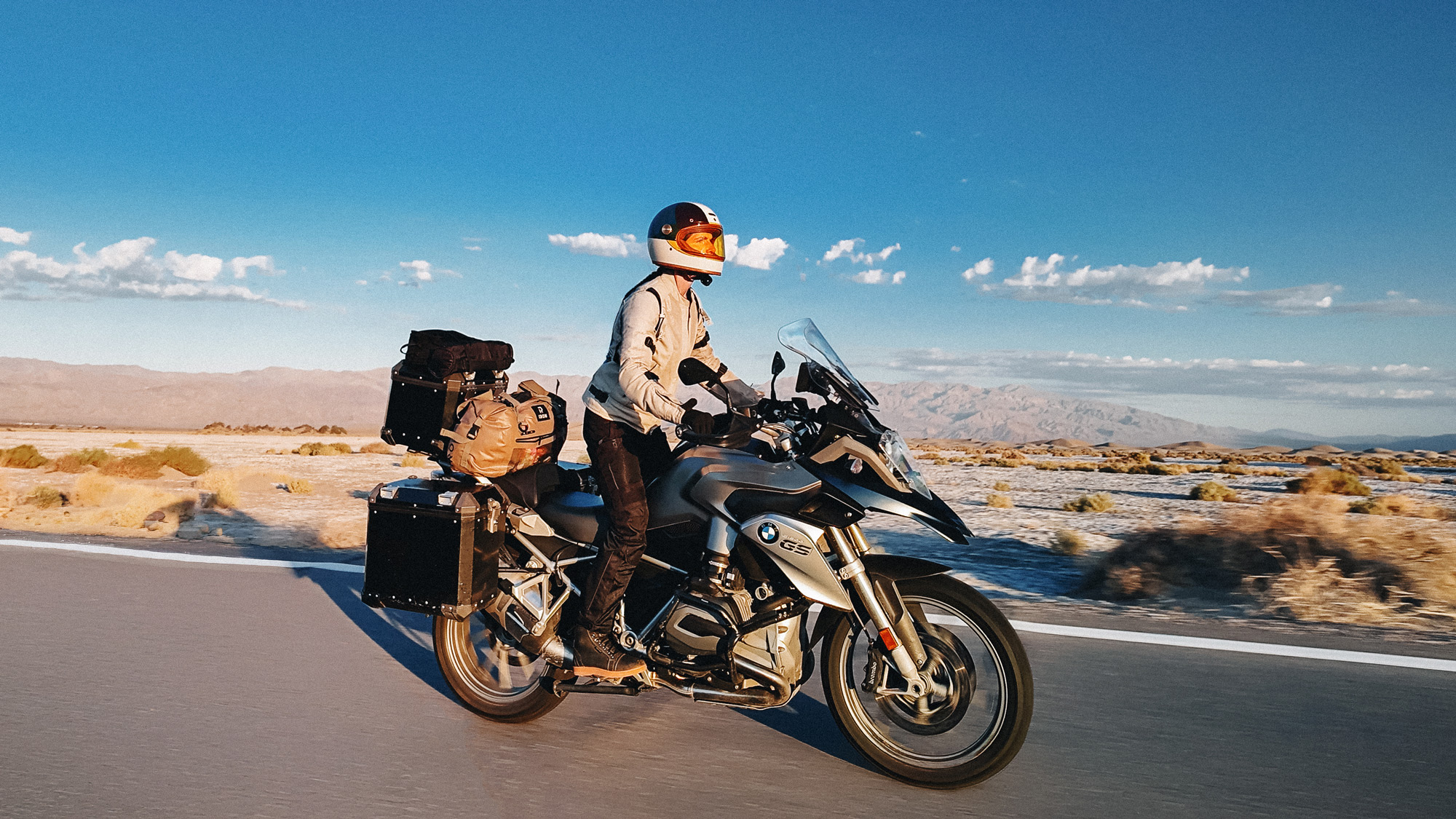
Fully loaded and heading through Death Valley during a two-week motorcycle trip through the Southwest.
The Challenge of Packing for a Motorcycle Trip Across Different Climates
I live in the Northeast. When I planned this trip, I was sick and tired of spring rain and cool Vermont weather, and all I wanted was to be out West in the warm, dry desert. Sounds great, right? Except I didn’t realize there is a very real Western monsoon season in late August and September, and I underestimated how elevation changes can make for cooler-than-anticipated temperatures.
Our route began in Scottsdale because that’s where we found the bikes we wanted to rent. From there, it crossed Arizona, Utah, Nevada, and California, with planned stops at the Grand Canyon, Zion, Bryce Canyon, Great Basin, Yosemite, and Death Valley. I understood that we would be moving between extreme desert heat and cool mornings at higher elevations. What I did not anticipate, and what really threw me a curveball, was the monsoon weather and high winds. We never made it to Zion because of the storms and flash floods.
Whenever I travel somewhere, I add all the locations along the route to my weather app and track them for weeks beforehand to get an idea of what to expect. As our trip drew nearer, we realized the tent we had purchased wasn’t the right one, and I needed to prepare for more “extreme” weather. I'm not great at packing to begin with, but after this trip, I think I have a better idea of how to do it next time. Here’s what I learned.
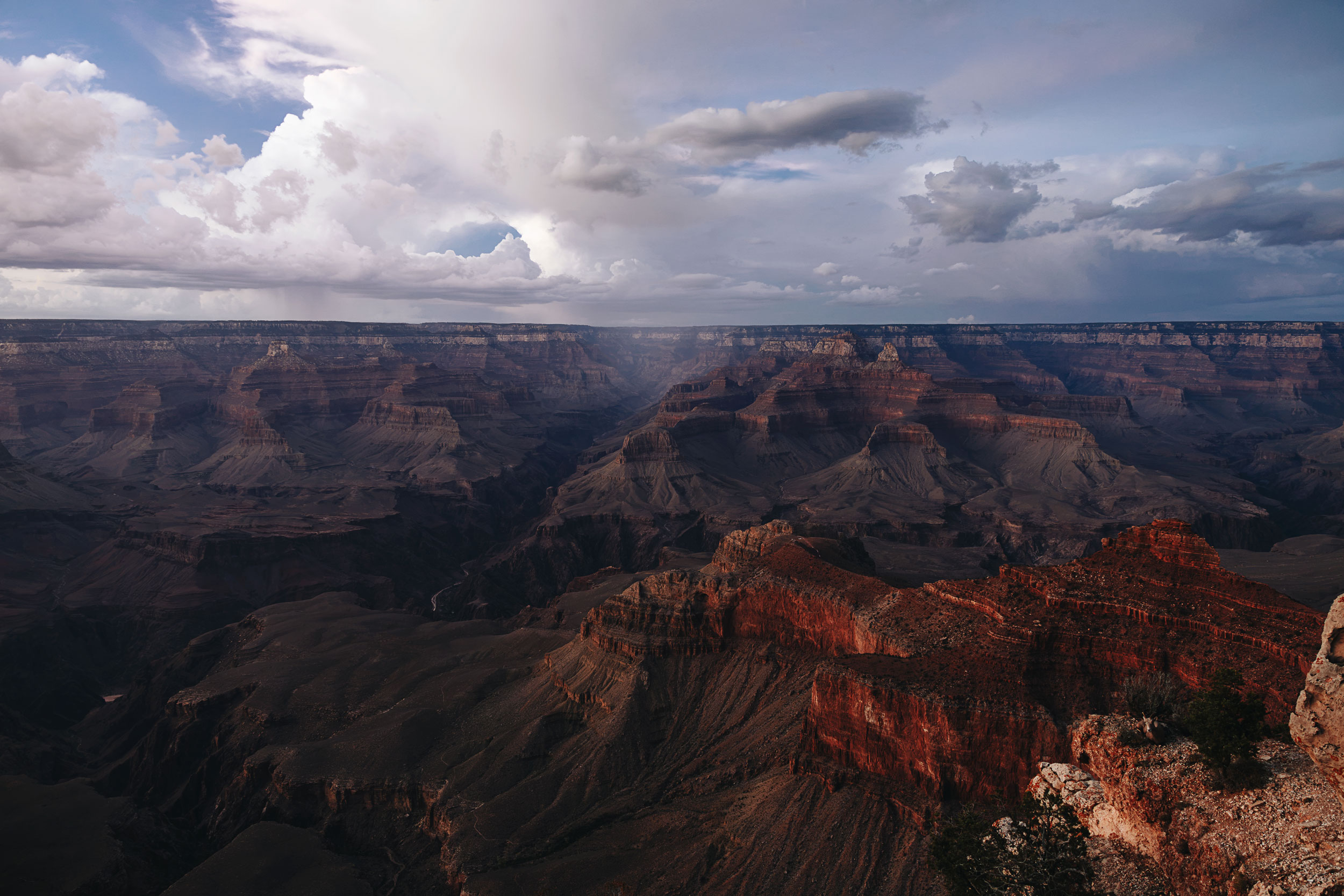
A storm over Bright Angel Canyon on August 30, as seen from Mather Point. At the time, we had no idea the previous day’s flash flood had devastated the canyon below.
How to Layer Motorcycle Gear for Changing Temperatures
The first thing I had to make peace with was that my clothes were going to get dirty and would need to be reused until we reached Baker, Nevada, where we could do laundry.
Temperatures started in the 100s in Scottsdale, so I knew my ventilated motorcycle jacket was the only one I wanted to bring. I just needed enough layers to make it work in different environments.
I took the same approach with my pants, except I stubbornly packed three pairs and regretted it later. I really only needed my ventilated motorcycle pants, which came with a liner that I packed for cooler days. But I never ended up using that liner because I had a thin wool base layer that could go underneath. Learn from me: if you’re traveling through a wide range of temperatures, leave the bulky liners behind and bring thin base layers instead.
For tops, I packed tanks, T-shirts, a long-sleeve wool top, a motocross jersey, and a sweatshirt. When the elevation increased and temperatures dropped, I could wear the wool layer and sweatshirt under my ventilated jacket.
Also, bring a beanie. Seriously. I forgot mine and had to buy one in Bryce Canyon when it hit 50 degrees and my head got cold. The same goes for wool socks. I packed three pairs in different thicknesses and used every single one.
The Outer Layers That Made Everything Work
You can pack all the warm layers for under ventilated gear you want, but if you don’t have a wind-blocking layer, the cold will still get through. Same for dampness, obviously. I didn’t know how much rain we would be dealing with (and I was really hoping for just dry desert heat), so I brought a lightweight rain jacket and pants that I hoped would mainly block the wind. I made sure I got a size that would fit over four additional layers underneath.
Luckily, air temps remained above 60 degrees on the bike throughout our whole trip. I still got a little bit cold when we hit rainstorms in Arizona and Utah, but these layers helped block the wind enough and kept me dry enough that I did not freeze while riding.
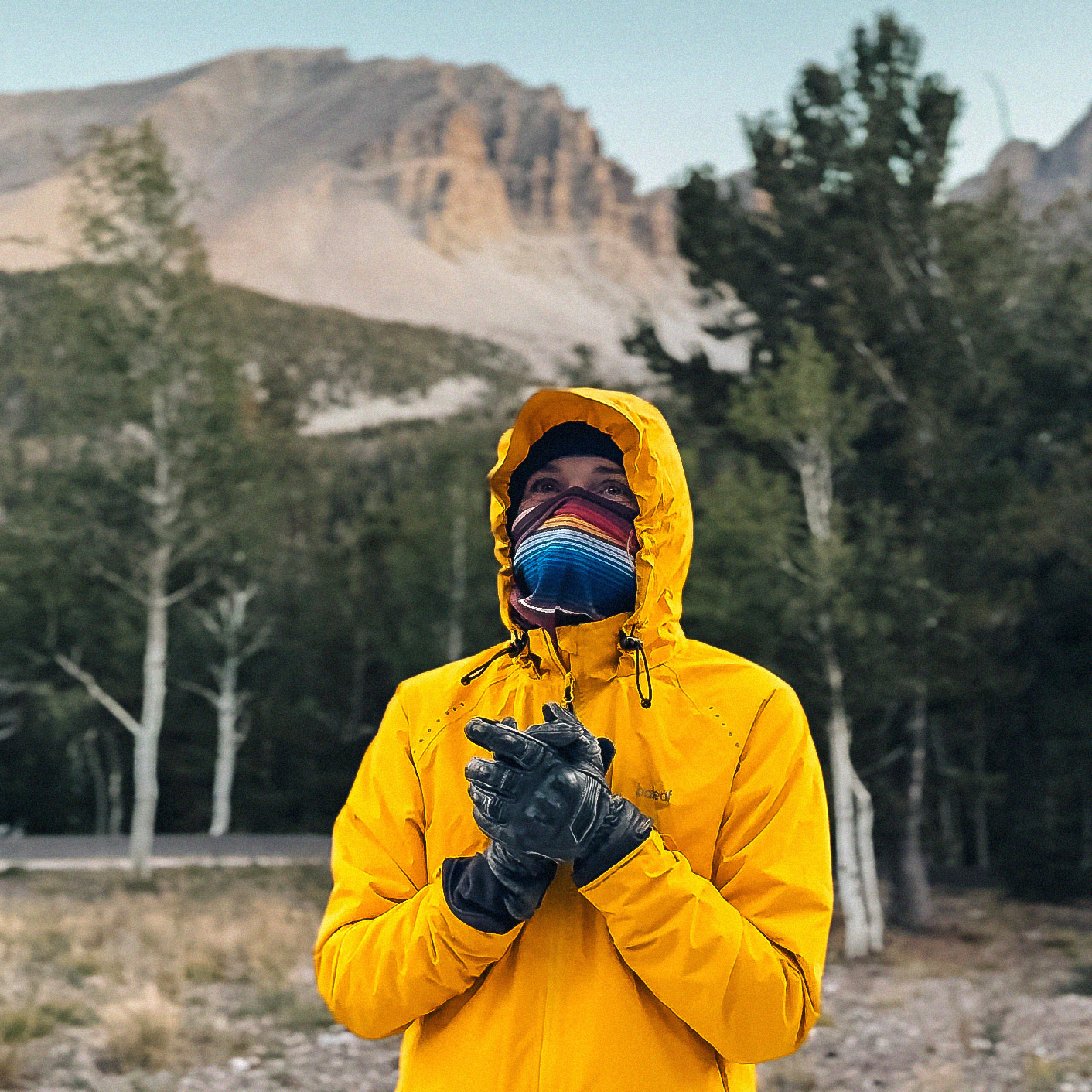
When temperatures dropped and wind howled at Wheeler Peak Campground, every layer I packed earned its space.
Heated Gear: Worth the Space?
Normally, I’d pack heated gloves, but I knew our bikes had heated grips and handguards, which meant they already had built-in warming and wind protection. If I was sure the temps would drop below 50 degrees while we were riding and not just at camp, I’d probably opt to bring heated gear too.
It's important to remember, riding a motorcycle at full speed can make the “feels like” temp about 20 degrees cooler than the air temperature. And when I get cold riding, I legit cannot function and cannot get warm without a long hot shower after I get off the bike, which was not an option at a lot of our campgrounds. But we weren’t really dealing with truly cold temperatures riding, so I opted for layering over heated gear.
One Pair of Gloves Wasn’t Enough
I feel you should always bring two pairs of gloves for a few reasons, but mainly, you should bring something ventilated and something warmer if you know you will be traveling through a wide temperature range. Because I knew we would deal with temperatures above 100 degrees, I packed our Powersport Gloves—my absolute favorite pair of gloves to wear in temps above 60 degrees. They breathe, provide great tactile feedback, have knuckle and palm protection, and are lightweight and easy to squeeze in the luggage.
I also packed a pair of our Black Full Gauntlet gloves in case of cooler weather. Oftentimes your hands are the first thing to get cold, even when you feel perfectly warm off the bike. It only takes a bit of wind to change that. You can tuck the full gauntlet gloves under your jacket cuffs so the cool air doesn’t get up your sleeves and the leather is warm and protective.
I did not end up needing to wear the full gauntlet gloves riding, though. It got cool, but with the heated grips and handguards, I was generally fine riding with my powersport gloves the whole time. Still, I would rather have an extra pair than not. Especially because it’s very easy to lose a glove while camping and packing/unpacking frequently.
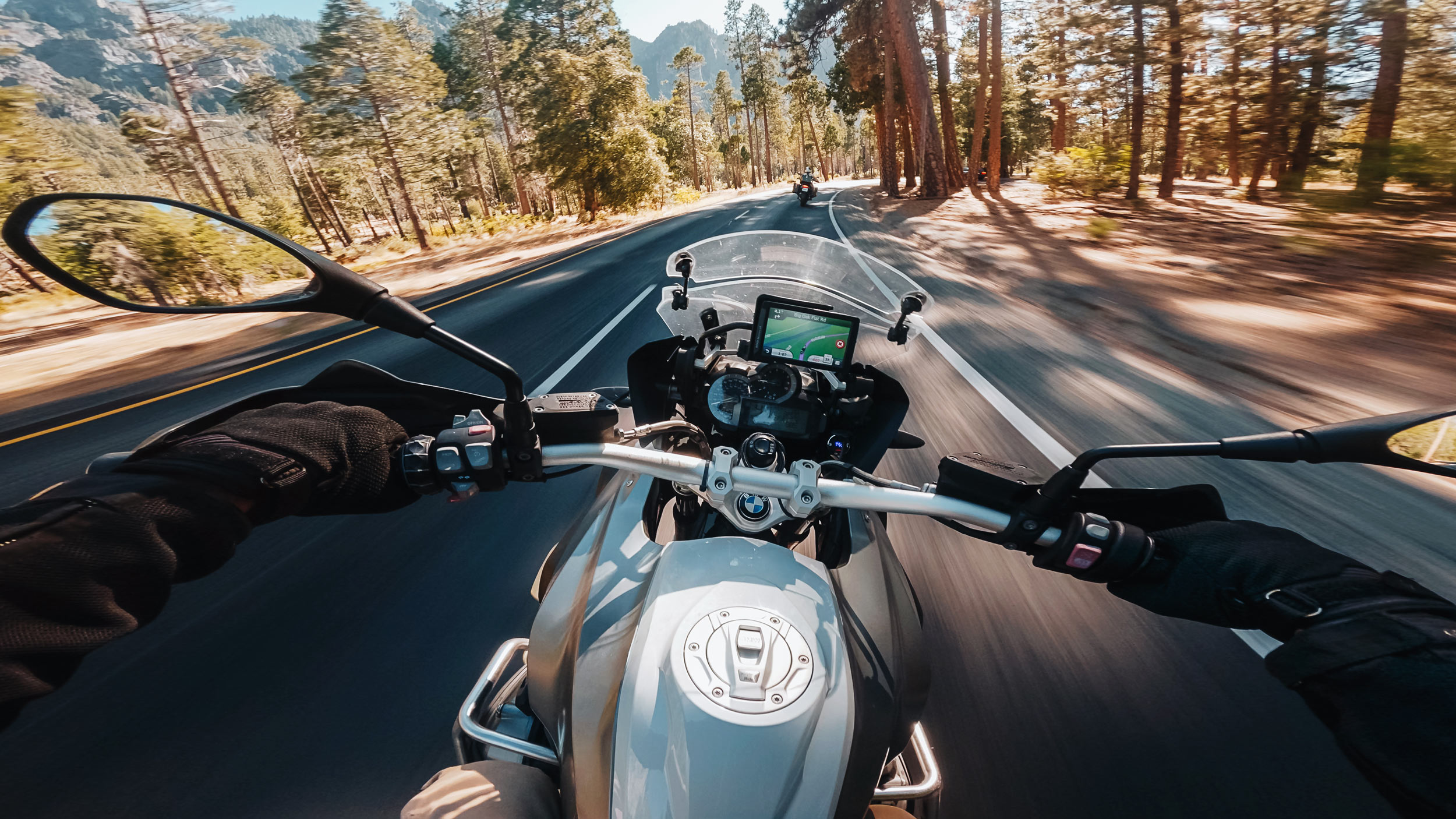
Indie Ridge Powersport Gloves in action on Big Oak Flat Road in Yosemite National Park.
The Motorcycle Boot Solution
There are two kinds of people: those who pack one pair of riding boots and those who pack extra. Unlike one pair of riding pants, which would have been fine, boots are the other thing I’d rather have multiple pairs of and here’s why:
With gloves, I can get away at lower temperatures with ventilated gloves when I have handguards and heated grips, but with boots—your feet are more exposed. And just as you will feel the cold air creeping into perforated leather on a cool day, you will feel that airflow on a hot day, and dampness if you get caught in the rain.
So packing a pair of warmer waterproof boots was a necessity for me. Of course, weather protection is only part of the equation. If you’ve ever wondered what separates a true protective motorcycle boot from a regular work or leather boot, Rose Anvil cut an Indie Ridge boot in half to examine exactly how it’s constructed. Some people would see 100-degree days and only take one pair regardless, but I don’t like my feet to suffer when I have options and I don’t regret taking both waterproof and ventilated boots at all.
I wore my Crossfields the most, as the temps were often above 70 degrees while riding and they were a lifesaver when we clocked 118.5 degrees in Death Valley—I would have overheated without my feet having airflow in that heat. But I also got caught in at least two rainstorms and had days at camp where we woke up to temps in the 30s and I was REALLY happy to have a pair of warm waterproof boots to wear around camp when we did.
I used both and they were both useful. Period. End of story. Also, I work for a moto boot company, so there’s that.
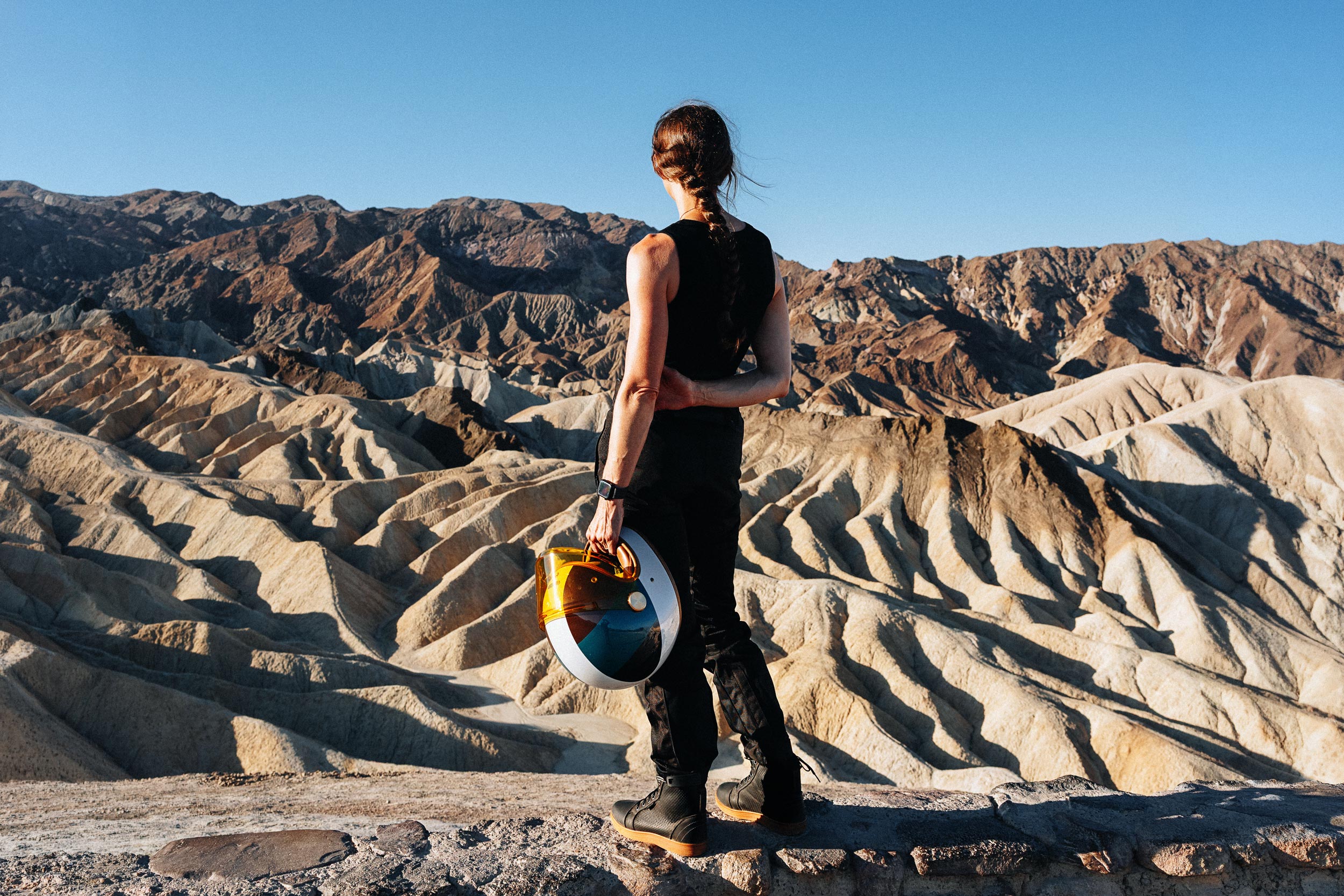
The ventilated Crossfields were my go-to boots throughout the trip, especially in the extreme heat of Death Valley, Nevada and Arizona.
Packing for Camp Without Packing Your Closet
Camp clothing is relatively easy: wear the same tops at camp you’ll wear under your gear on the bike. Additionally, make sure you bring comfy clothing to sleep and lounge in and a couple extra layers for keeping warm. Just as we checked the weather before starting our trip, we also checked campfire restrictions at the campgrounds where we were staying and we were not able to start a campfire at one of our COLDEST sites, 10,000 feet up in Great Basin. Since I had already packed those layers for riding, I had them and I wore every single one of them at this campground. I also had my campground sweatpants to layer with and I would have preferred an extra pair of sweats over the extra moto pants I packed. It was so cold at points, I had to layer the thin wool layers under my sweatpants and sweatshirt and put on the rain gear over it to protect against the wind.
Aside from sweatpants, other items I wanted for camp included a pair of shorts, flip-flops and a beanie, as I already mentioned. I thought about packing a scarf, but opted to just use my motorcycle mask to keep my neck warm since I already had it packed for wind/sand.
I personally made peace with going out to dinner the few times we did in a pair of cut-off jean shorts, flip-flops and tank tops, or just wearing my moto clothing and not caring. In my mind, we were camping and out in the wild at national parks, so that should be completely acceptable.
What Took Up Space but Earned It
Some things were bulky, but I would pack them again anyway.
Sweatpants and sweatshirts took up more room than other layers, but having something warm and comfortable to wear at camp was worth it. One hundred percent.
Then there were the camping essentials: a small sheepskin that I ended up putting over my pillow to keep my head warm, a warm but lightweight sleeping bag, a lightweight tent appropriate for the weather we anticipated, an air mattress, and an inflatable pillow. Make sure your sleeping bag is rated for the temperatures you will be facing, then bring one that can accommodate cooler temps.
Could I have packed a more minimal sleep setup? For me: no. I value good sleep so much that there isn’t a thing I would have left behind. That being said, my air mattress pretty much died on this trip, so I threw it away in Yosemite before we left. Yay for souvenir space.
And yes, I packed a coffee percolator. Some things are non-negotiable.
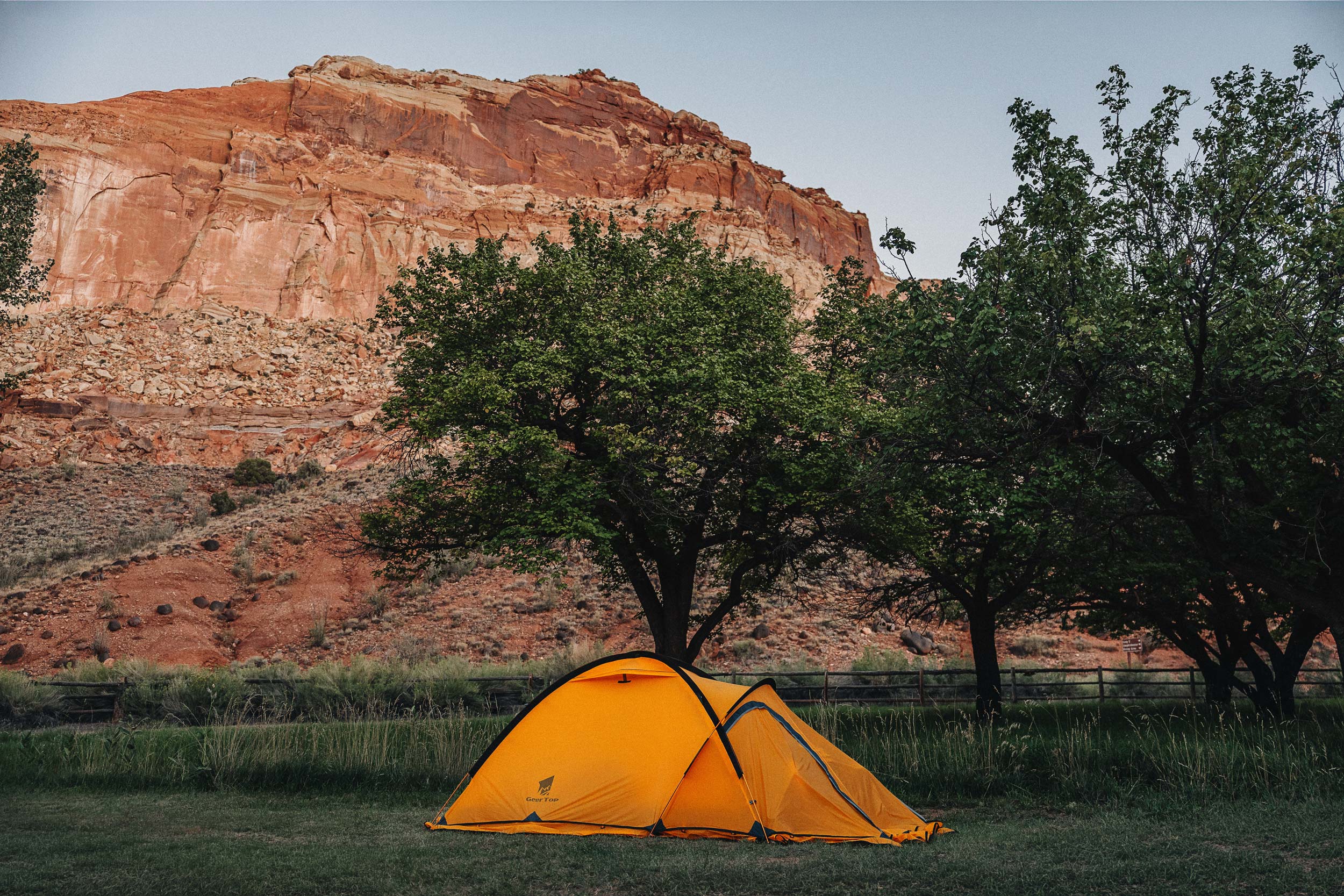
Our tent at Fruita Campground in Capitol Reef National Park, where we ended up going instead of Zion. A comfortable sleep setup was worth every bit of luggage space it took up.
What I Packed but Barely Used
There is one thing that I was not sure was worth packing on this moto trip: small camping chairs. Hear me out.
They DO fit in the pannier boxes, but take up a ton of that box space, and at the end of the day, every campground we stayed at had picnic tables, or fire restrictions. Until we got to Yosemite.
That being said, we were able to have a campfire all three nights in Yosemite and I did very much enjoy the camping chairs then. In fact, we met two very cool guys camping next to us who joined us by the campfire each night and had we not had those chairs, we would not have enjoyed the company of new friends around the campfire.
But did we NEED those chairs? The jury is still out on that one. Maybe I will try to find something smaller in the future.
What I Would Pack Differently Next Time
Fewer moto protective pants and more lightweight sweatpants or normal pants. I really didn’t need ALL the tops I ended up bringing either. I could have done with three tanks, three tees, and the long-sleeve layers I packed, all of which I used. Extra underwear and socks would have been a bit more useful, since we went through a lot of hot and dusty weather.
I also would have dialed in my camera gear a bit. I didn’t mention the camera gear yet, because not everybody is a content creator like me and needs to dedicate an entire box on their bike JUST for camera gear and a tripod. However, I never use all of it. I really wanted to bring my film camera, and as usual, the question remains: how many years before I will actually develop that film? Did I really need that extra lens I had to carry with me everywhere? As a photographer, the answer is always: I’d rather have it than not, but I do need to get this dialed in a bit better.
Everything else was used and abused and needed. Even my sheepskin, which I intended to use on the seat of my motorcycle to keep my bum comfy, I ended up using instead as a pillow topper to keep my head warm while sleeping. It was priceless.
So hopefully, if you are like me and planning your first big motorcycle trip in the future, this will help you decide what you will and will not need to take.
Or perhaps you are a well-seasoned motorcycle traveler. If so, please share your packing wisdom with us all!
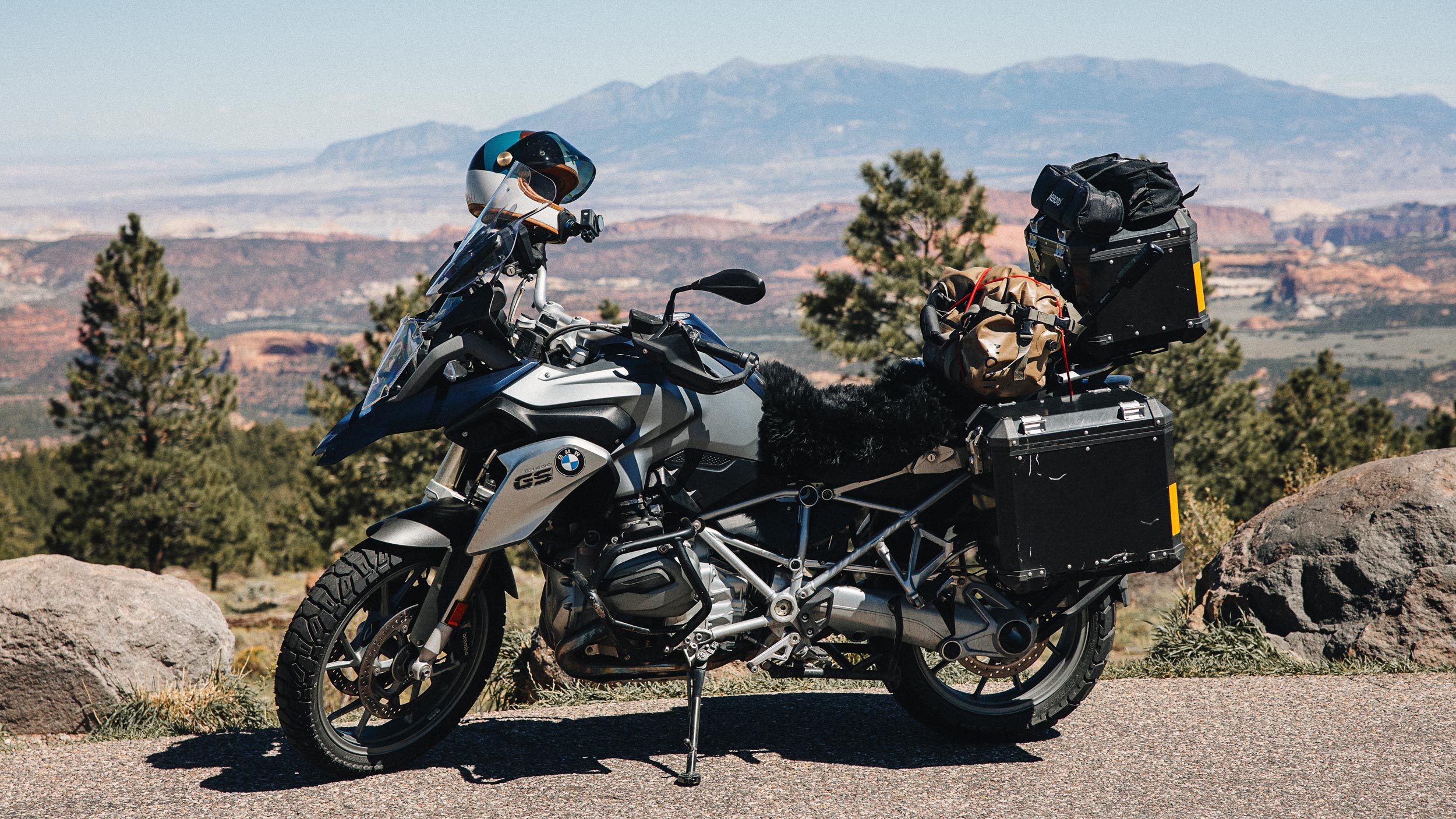
Fully loaded and still figuring out what worked. The sheepskin lasted one leg as a seat cover before I got tired of sliding around and repurposed it to keep my head warm at camp.