


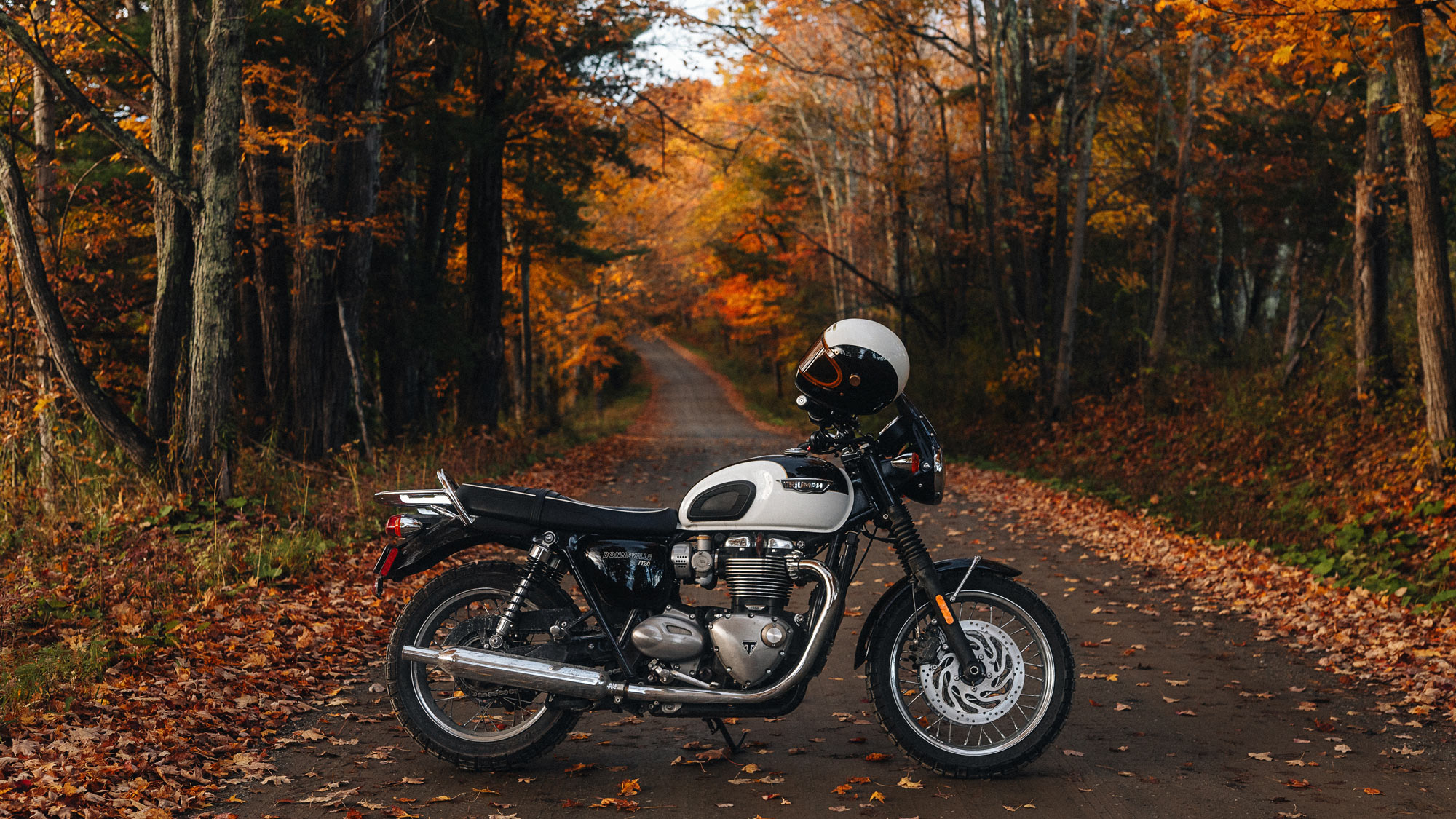
This back unpaved road is only five minutes from my house—and it’s one of my favorite places to pull over for a scenic foliage photo.
Fall is the most beautiful time of year to ride in Vermont, but planning your rides around the foliage requires a bit of flexibility. The colors develop across the region over a few weeks, mornings can be very chilly, and–in my opinion–some of the best scenery means leaving the pavement. Here is how I'd plan a trip: where I'd ride, when I'd come, and what I would bring for the weather.
What are the best motorcycle roads in Vermont?
I’ve lived in Vermont almost six years now, and my favorite thing about living here is the roads. Having moved from a very congested corridor of Connecticut off I-95, I would avoid driving 5 miles at all costs because 5 miles could turn into an hour in standstill traffic. But I’ll happily ride or drive 45 minutes of Vermont roads to get to a good grocery store. Why? Because all our roads are scenic. We may not have big tall mountains, but almost the entire state road system runs through the Green Mountains and its valleys, and its twists and turns are delightful for riding. I could list a dozen different roads I know of that are beautiful roads to ride, but if you are on a motorcycle and it’s a road you feel you want to turn onto you probably won’t be disappointed. That being said, I would be remiss not to name a few of the most scenic/popular paved roads first:
Route 100: probably Vermont’s most famous road, Route 100 runs from southern to northern Vermont and passes through many elevation changes and historic towns along the way, making it an ideal road to ride during peak foliage. You can see the progression of color and how it correlates with the changes in elevation. I’ve only ridden this road south to north because of where I live, but I would do it in reverse during foliage season, as the northern parts of the state often reach peak foliage earlier than the southern parts of the state.
Smugglers’ Notch (northern Vermont): I confess, I’ve never actually ridden this road on my bike during peak foliage, as it’s famously busy with traffic. I suspect midweek is the best time to ride it if you want to enjoy it without a line of cars. But it belongs on the list nonetheless: Vermont Route 108 (the Notch) winds through a dramatic, narrow pass with steep grades reaching up to 16% and is situated between Mount Mansfield and Spruce Peak. The Notch got its name from early smuggling routes into Canada, and the road was later used to bring liquor across the border during Prohibition. Please note: this road closes during the winter months– be sure to check for road closures before riding, in case of early snow.
Appalachian Gap (central Vermont): A twelve-mile section of road that runs between Route 100 and Route 116 and crests in Buel’s Gore with a beautiful scenic overlook. It’s popular with motorcyclists because of its steep grades and tight switchbacks. It’s just a fun stretch of road to ride and doesn’t take super long–the perfect addition to a peak Fall Foliage tour in Vermont.
Lincoln Gap: Lincoln Gap is Vermont’s claim to fame for steep grades, boasting the steepest paved mile in the U.S. on its eastern side. With grades reach up to 24%, the way up is certainly a fun, winding struggle up to the peak where the hiking trails cross the road. The western side of the Gap is unpaved, however, so if you don’t like steep gravel roads (up to 20% grade), you’ll want to turn around in the parking lot at the top and head back down the way you came.
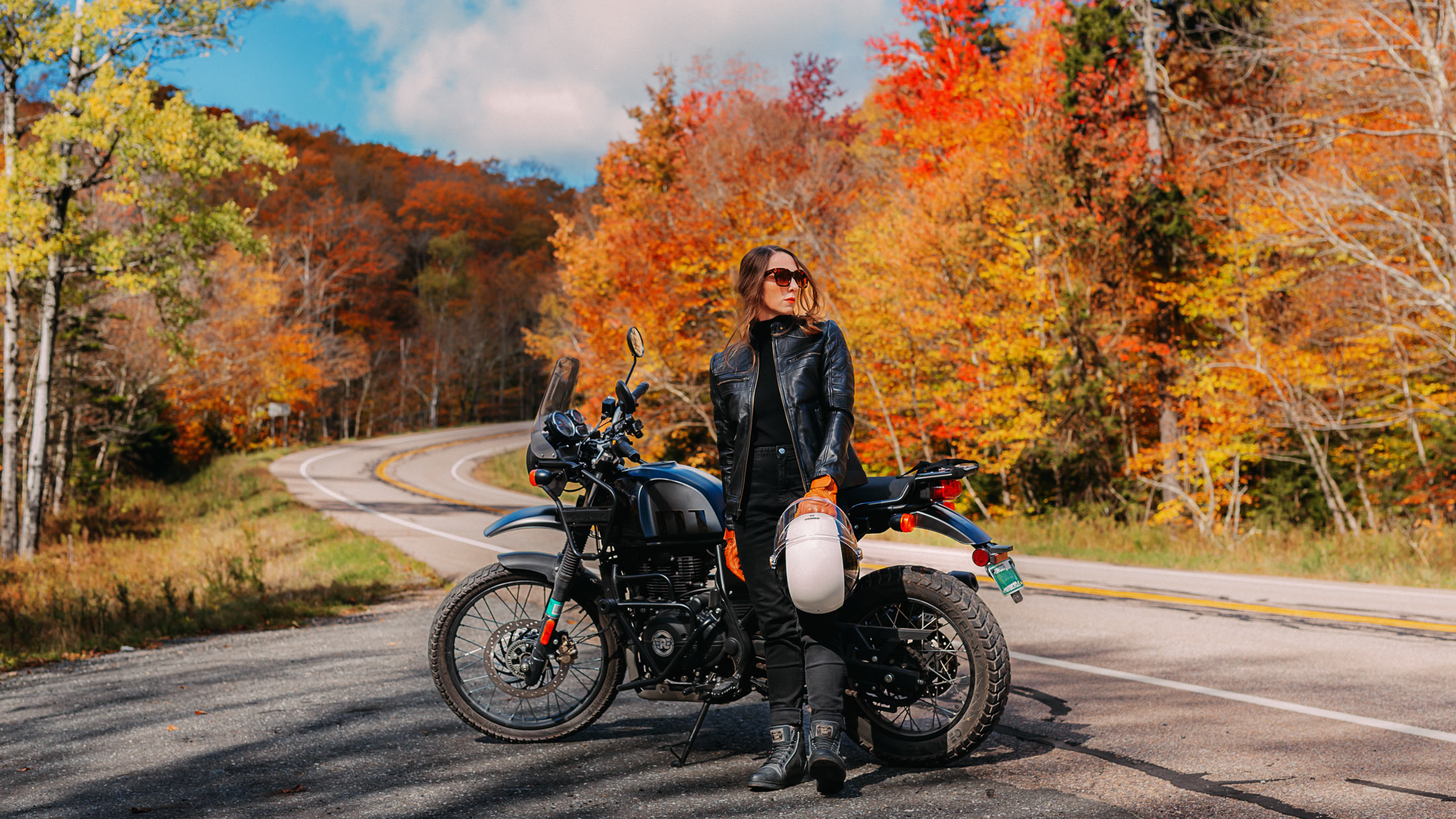
Middlebury Gap is one of my favorite paved routes for fall color—and those curves are a pretty good bonus.
Middlebury Gap & Brandon Gap (central Vermont): I’m listing these two mountain passes together because they’re close to each other and are probably two of my favorite paved routes for viewing foliage. I’m not sure why, but the colors along both roads are some of the most beautiful and intense during peak season. And there’s rarely any traffic. I especially like riding both from west to east—the views in that direction are so dramatic. The northbound climb up Brandon Gap is breathtaking, and I love the steep turns and descents heading east on Middlebury Gap. Near the top of Middlebury Gap, you can stop for a leisurely stroll along the Robert Frost Interpretive Trail and enjoy Middlebury College’s Bread Loaf campus for writers: a picturesque New England campus in the mountains.
Molly Stark Byway: southern Vermont has many beautiful roads to ride as well. If you are heading south on Route 100, be sure to take a turn onto this stunning 48-mile road that connects Brattleboro and Bennington. If you have time to ride it the entire length, it’s definitely worth it. But if not, at least be sure to stop at the Hogback Mountain Overlook for a beautiful scenic 100-mile view of Vermont and Massachusetts on a clear day.
Vermont Route 30: if you travel anywhere in southern Vermont, you will likely find yourself on Route 30 at some point, which runs from Brattleboro to Middlebury and cuts through some beautiful old historic New England towns, mountains, quarries, farmlands and covered bridges along the way. When I first moved to Vermont, the drive on Route 30 during foliage season had me completely smitten, and it’s part of the reason I live where I do now.
Historic Route 7A: also known as “The Shires of Vermont Byway,” is a beautiful historic road running approximately 28 miles from Bennington to Dorset and nestled in between the Green Mountains and the Taconic Mountains. It takes you through some lovely scenic towns, such as Arlington and Manchester. I personally love the new Route 7 for it’s dramatic elevation climbs and mountain views, but both are great roads for riding. Route 7 is more of a small highway by Vermont standards.
Honorable mention roads that I would absolutely ride any day of the year, but are not as big as some of the others in name and length: Route 313 in Arlington, Route 4 from Rutland to Woodstock, Routes 107, 103 and 11 in central and southern Vermont. Just to name a few.
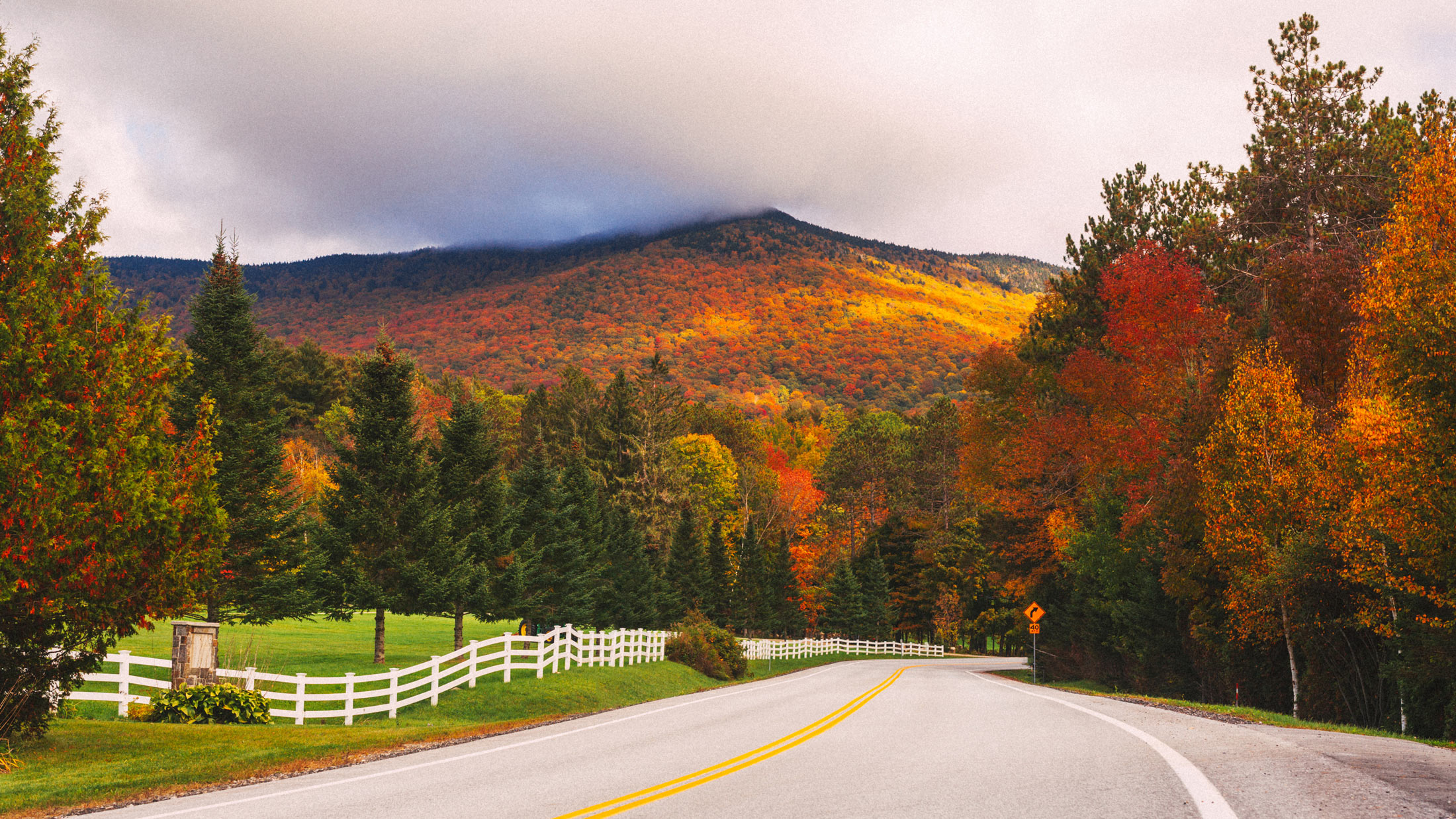
A winding road, a mountain in fall color, and a little cloud drama overhead: Brandon Gap, October 5, 2023
When is the best time to see fall foliage in Vermont?
The best answer to this question is—it depends. There’s no absolute or exact “peak” window that’s the same year after year, but it’s generally safe to say that it falls between the last week of September and the second week of October. The trees often start to change color slowly in mid-September and the mountains and areas further north usually reach peak color first during the first week of October–though it's not uncommon for a late September or mid-October peak. From there, the color works its way down into the valleys and southern parts of the state, which may peak later in October–even into the third week if we are lucky.
This is why I mentioned riding Route 100 from north to south if I were making a longer trip: early October would likely be the best time to start up near the Canadian border and work your way down toward Massachusetts and Connecticut. In fact, I would probably start at Lake Willoughby the first week of October and head south on Route 100 from there. You can technically do the full route in a day or two, but it’s definitely best broken up into multiple days, with room to explore off 100 for the fullest experience. But do what you like. This leads perfectly into the next section, though…
How many days do you need for a Vermont fall foliage trip?
I’m not even joking when I say this - how much time do you have? If I could take off a full week from work every autumn season to enjoy the foliage and ride around Vermont and other parts of New England, that would be how I would do it. I don’t because I’ve lived most of my life here in the Northeast, so I am able to enjoy the foliage season while staring out my office window or commuting anywhere. But if I was making the trip up to the Northeast specifically to see the fall colors, I’d take a full week. The reason being, the colors come on gradually and peak rapidly. As I am typing out this article, I am looking out my window and viewing color that was not there one week ago. In one week’s time you can see the intensity of color form and it just gets better and better. If you only come for two days, you get a glimpse, but not the full picture coming to life. For the full north-to-south riding experience, I would recommend the first weekend of October through the second weekend of October. This would provide enough time to begin in the higher elevations up north and work your way south at a leisurely pace. If I only had one weekend, I’d pick one smaller region and ride around, taking as many back roads as possible. I also recommend following a foliage tracker for updates on foliage progress - these can be super helpful.
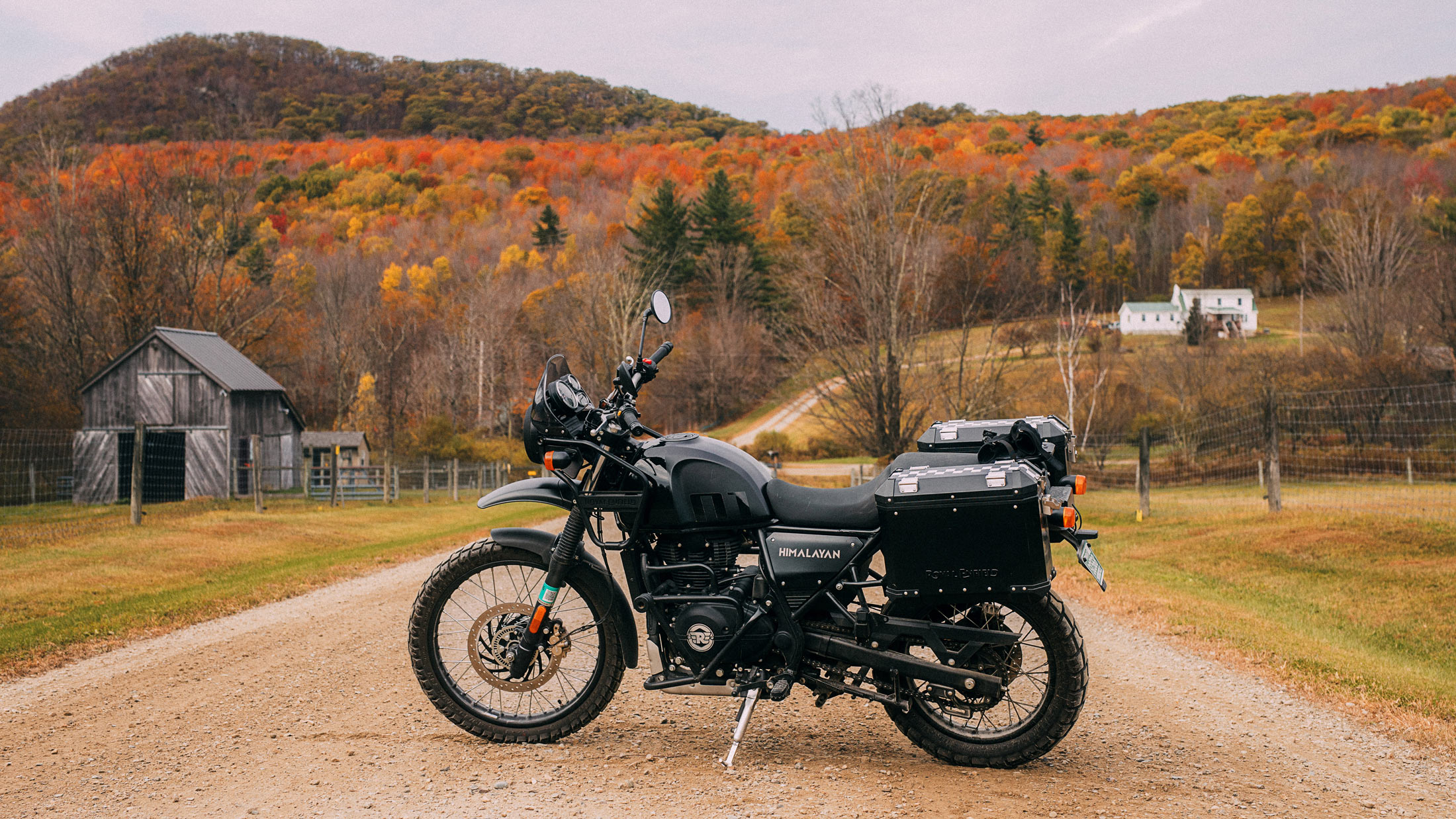
A gravel-road detour on a fall ride in Vermont.
Do you need to ride gravel roads to see Vermont’s best fall scenery?
This might be the most controversial topic of this article for me to write about. But I like controversy, so here goes. In my opinion, yes. You need to ride gravel roads to see Vermont’s best fall scenery. Let me explain. While I listed a rather long list of mostly paved motorcycle roads earlier in this article, that was because these are main roads in Vermont and the main roads are all paved. However, Vermont has over 8,500 miles of unpaved roads, which is more than half the roads in the state (source). So while you can see the state only via its paved roads, the best views are often to be found OFF these roads. In fact, one of my biggest pet peeves about riding the numbered routes here is the lack of scenic overlooks. You can find places to pull off the road, park and take a photo, but they are few and far between and you can rarely get a nice shot with your bike and a view. And don't we all want that? In contrast, the well groomed gravel backroads often take you to some of the most breathtaking views, farmlands and properties, and it’s SO easy to park your bike and get a beautiful shot of your bike with the foliage on these roads. In fact, I often park my bike on these back roads to film videos and take photos for a long time without seeing a single car go by– which for me is ideal. My rule of thumb is, if you see a random gravel road with a street sign that says “Hill” in the title, that’s a good road to investigate if you have good tires for it. It will usually take you up to a nice view and you might not see another human the entire time. And if you are really adventurous and riding a dual sport, some of these unpaved back roads lead or turn into Vermont Class 4 roads. These unmaintained roads are traveled at your own risk, but they can offer a fun and unique experience– they can range from super easy narrow gravel roads to single track and mud. So while it’s not necessary to ride the unpaved roads, I think they are the best scenery Vermont has to offer. For this reason, I like to put dual sport tires on every bike I own, because it’s not uncommon to be on a lovely paved back road that just turns to gravel halfway up (like Lincoln Gap). I don’t like needing to turn around on a steep hill, so I just prefer to keep knobby tires on all my bikes and rip down the gravel roads if I choose.
What should I wear for fall motorcycle riding in Vermont?
Like with any trip, be prepared. We can have warm, balmy autumn months—in which case the foliage tends to last longer—or biting damp cold, like we’ve been having lately this season. Generally, temperatures in late September can range from 35 to 75 degrees, but it’s also not uncommon to wake up to a hard frost. If you plan to get on the road early and it’s freezing, you may want to bring your heated or insulated gear and plenty of layers.
I honestly don’t go out riding below 50 degrees unless it’s for a short ride, because I get so cold I can’t warm up afterwards. Midday, when the sun is highest, is usually the warmest time to ride and get your miles in, and it’s not uncommon to see people sneaking in rides during their lunch breaks this time of year. If you see ADV riders out, they’re often already dressed head to toe in insulated gear.
When I ride in autumn, I usually wear a full set of wool base layers and I always wear my Indie Ridge Waterproof boots with wool socks; they help keep my feet dry when I run into wet weather. Then I add a sweatshirt or wool sweater under my warmest riding jacket, followed by wind- and rain-protective layers over everything. Additionally, I like to wear an Indie Ridge face mask under my helmet to keep my neck and face warm. I realize that probably sounds like overkill, but trust me—it’s not.
If you have heated gear and want to come ride Vermont in autumn, bring it! If you don’t, plan for lots of layers and ride a bike with heated grips or bring hand warmers. I have heated grips and those paired with my Indie Ridge leather gloves help keep my hands warm enough on the chilly days.
For more advice on packing for changing temperatures, see our guide to packing for a motorcycle trip.
Anyone else have tips for riding in Vermont? We’d love to hear them.
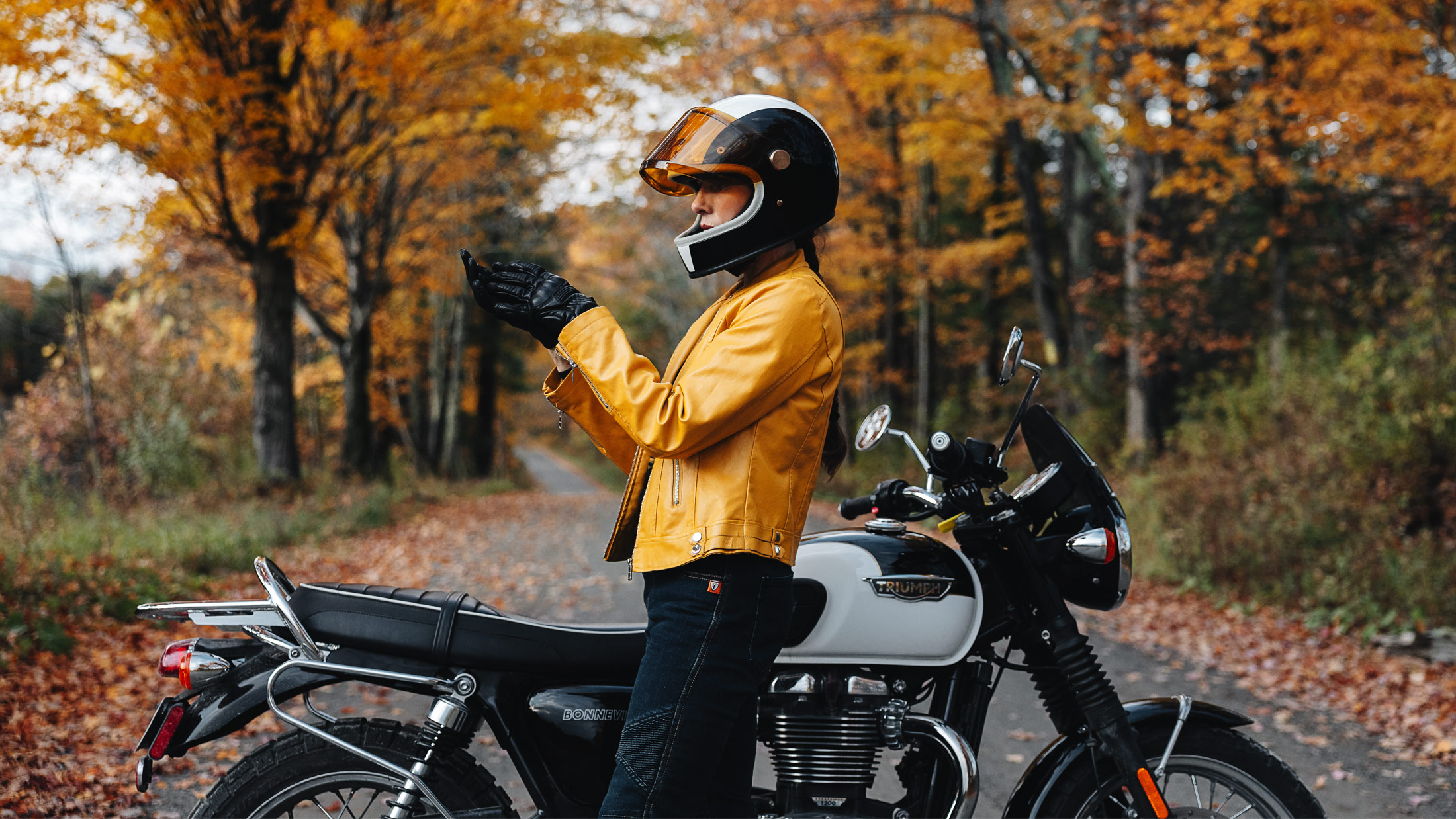
Pulling on my Indie Ridge Getaway Gloves before heading out for a fall ride.